Commercial box gutter maintenance Sydney facility managers neglect is the leading cause of sudden, catastrophic internal flooding across warehouses, retail complexes, and multi-unit strata buildings. Unlike standard external residential eaves gutters that spill excess rainwater harmlessly onto garden beds, internal box gutters sit concealed inside the building perimeter. When leaves, construction debris, or avian nests block a box gutter sump, thousands of litres of trapped stormwater discharge directly through internal ceiling cavities. Understanding the hydraulic mechanics of commercial drainage systems—and applying strict preventative clearing schedules—is critical for safeguarding commercial property assets.
Key Takeaways
- Internal Placement Magnifies Flood Risk: Box gutters sit directly inside roof valleys and behind parapet walls, forcing blocked rainwater straight into internal workspaces and stockrooms rather than over the exterior roof edge.
- High-Volume Hydraulic Loads Require Precision: Commercial box gutters handle massive catchment volumes compared to domestic eaves systems, demanding unobstructed sumps, correctly calibrated overflow weirs, and regular wet/dry vacuum extraction.
- Silt Accumulation Accelerates Metal Corrosion: Standing water trapped beneath decaying organic mulch strips protective zinc-aluminium coatings off Colorbond and Zincalume steel, causing premature sole perforation.
- Scheduled Vacuum Clearances Protect Commercial Leases: Implementing bi-annual commercial drainage audits ensures compliance with commercial lease make-good clauses and prevents costly business interruption claims.
What Is the Difference Between a Box Gutter and an Eaves Gutter?
A box gutter is a wide, flat-bottomed internal drainage trough concealed behind parapet walls or between pitched roof sections, whereas an eaves gutter hangs externally along the outer fascia edge. Because box gutters sit entirely inside the building footprint, an overflow spills directly into internal ceilings rather than onto the ground outside.
In residential construction across Sydney, standard eaves gutters rely on external slotted fronts or outer lip lower-points to shed excess water away from the building envelope during extreme downpours. Conversely, commercial warehouses, industrial factories in Parramatta and Macquarie Park, and modern flat-roofed strata complexes rely on wide internal box gutters built to AS/NZS 3500.3 standards to capture immense surface runoff from vast metal roof spans.
How Overflow Behaviour Differs by Gutter Design:
•Commercial Box Gutters (Internal System): Built directly inside the roofline between pitched roof planes or behind parapet walls; if internal rainheads or scuppers block, rising stormwater breaches internal flashing lips and floods straight through the ceiling cavity.
•Standard Eaves Gutters (External System): Mounted outside the building envelope on the outer fascia board; if a blockage occurs, excess rainwater spills harmlessly over the outer lip onto exterior garden beds or pathways.
Box Gutters vs. Eaves Gutters: Technical Comparison
Facility managers and owners corporations must understand how structural geometry impacts maintenance frequency and failure severity across different property types.
| Technical Feature | Commercial Box Gutters | Standard Eaves Gutters |
| Structural Location | Concealed internally behind parapet walls or sandwiched between adjoining roof planes. | Mounted externally onto the outer timber or metal fascia board along the roof perimeter. |
| Catchment Capacity | Engineered for high-volume stormwater runoff across massive industrial or multi-unit roof spans. | Designed for moderate runoff from standard domestic pitched roof slopes. |
| Primary Overflow Mechanism | Relies on internal rainheads, scuppers, and engineered overflow devices through parapet walls. | Spills naturally over the lower outer lip or through front-mounted slotted overflow holes. |
| Consequence of Blockage | Severe internal ceiling collapse, ruined warehouse inventory, and hazardous electrical short-circuits. | Exterior water staining on eaves, fascia rot, and localised pooling around exterior foundations. |
| Maintenance Methodology | Requires certified working-at-heights anchor access and high-power industrial vacuum extraction. | Accessible via standard ladder stabilisation or edge-protection setups with manual/vacuum clearing. |
Why Box Gutter Overflow Ceiling Damage Happens So Rapidly
Experiencing box gutter overflow ceiling damage rarely results from a single stray leaf. Instead, it occurs when accumulated silt progressively reduces the cross-sectional volume of the trough until a sudden, high-intensity Sydney storm overwhelms the remaining capacity.
Three primary mechanical failures trigger commercial box gutter flooding:
1. Obstructed Overflow Weirs: Under AS/NZS 3500.3, every box gutter requires a secondary high-capacity overflow device to discharge water safely if the primary downpipe fails. When nesting birds or accumulated wind debris pack into parapet scuppers, rainwater has nowhere to escape except backwards under the roof sheet lap joints.mbiguity. The claims adjuster cannot declare that water ingress was the direct result of pre-existing building neglect.
2. Blocked Sump Outlets and Rainheads: Box gutters drain vertically through recessed sumps into large downpipes. Wind-blown plastic wrapping, flattened cardboard, and dense eucalyptus leaf mats easily bridge across sump grates, halting drainage instantly.
3. Insufficient Fall and Standing Ponding: Box gutters are fabricated with minimal longitudinal slope (typically 1:100 to 1:200). Heavy wet silt creates artificial dams that hold stagnant water against metal seams, accelerating galvanic corrosion and rust perforation.
Industrial Roof Drainage Maintenance: Best Practice Standards
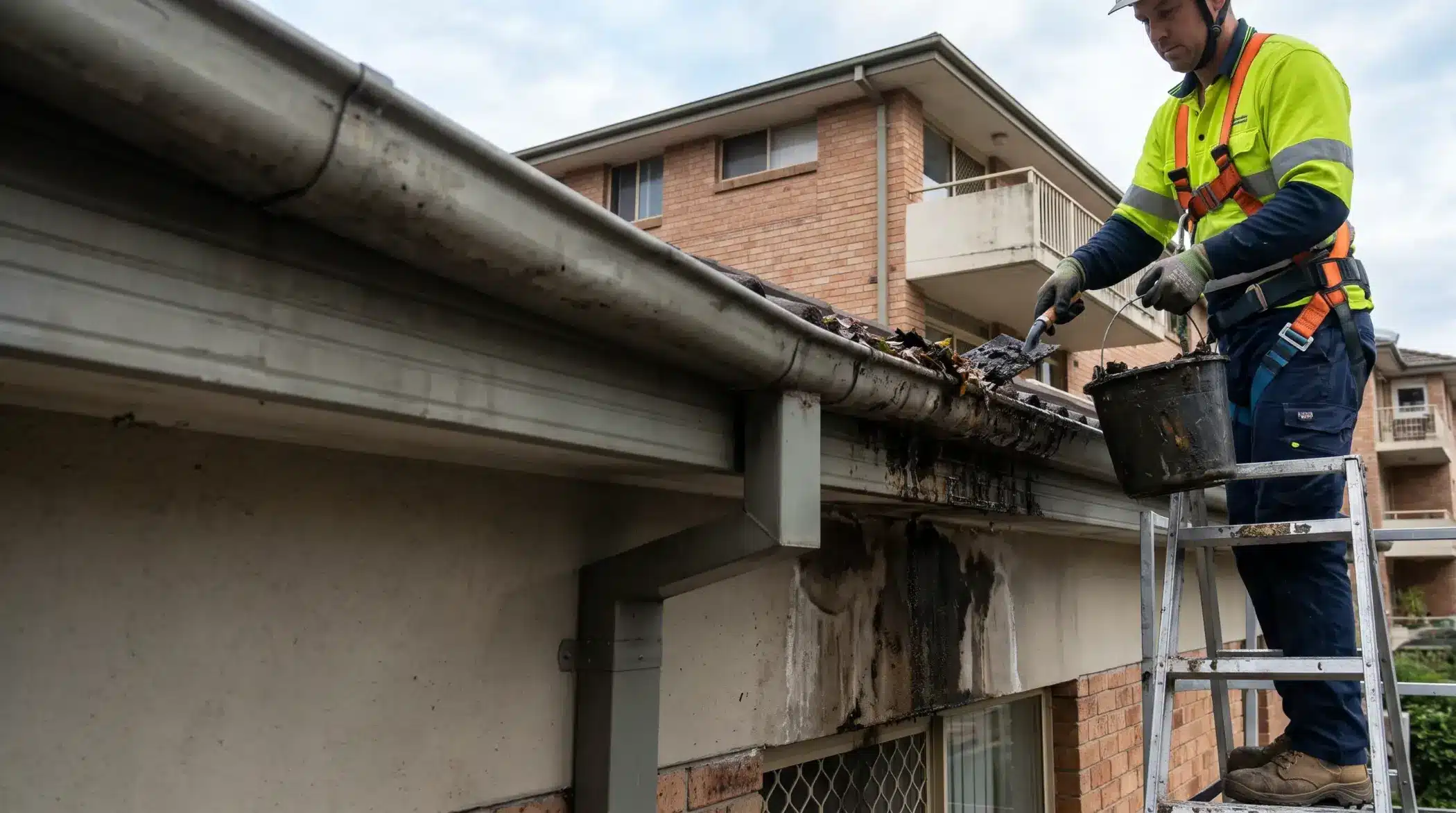
Clearing expansive commercial box gutters requires specialised equipment and strict regulatory compliance that standard domestic cleaners cannot provide. Attempting to clear large-span industrial valleys with basic hand scoops leaves fine abrasive silt behind, which continues to hold moisture and corrode metal substrates.
Professional industrial roof drainage maintenance combined with systematic warehouse roof valley cleaning executes a methodical, multi-stage protocol:
•Certified Working-at-Heights Execution: Because commercial roofs lack perimeter guardrails, technicians deploy calibrated fall-arrest harnesses, static lines, and SafeWork NSW compliant Safe Work Method Statements (SWMS).
•High-Volume Wet/Dry Vacuum Extraction: Industrial-grade vacuum units strip out compacted mud, wet foliage, and fine roofing grit without pushing debris down into internal stormwater pipes.
•Downpipe and Rainhead Flow Verification: Technicians inspect internal rainheads, clear strainer baskets, and verify unimpeded vertical discharge to ground-level stormwater pits.
•Seam, Flashing, and Substrate Inspection: Once the metal sole is bare, technicians examine expansion joints, silicone seals, and parapet flashings for lifting, cracking, or early-stage oxidation.
How Often Should Commercial Box Gutters Be Cleaned?
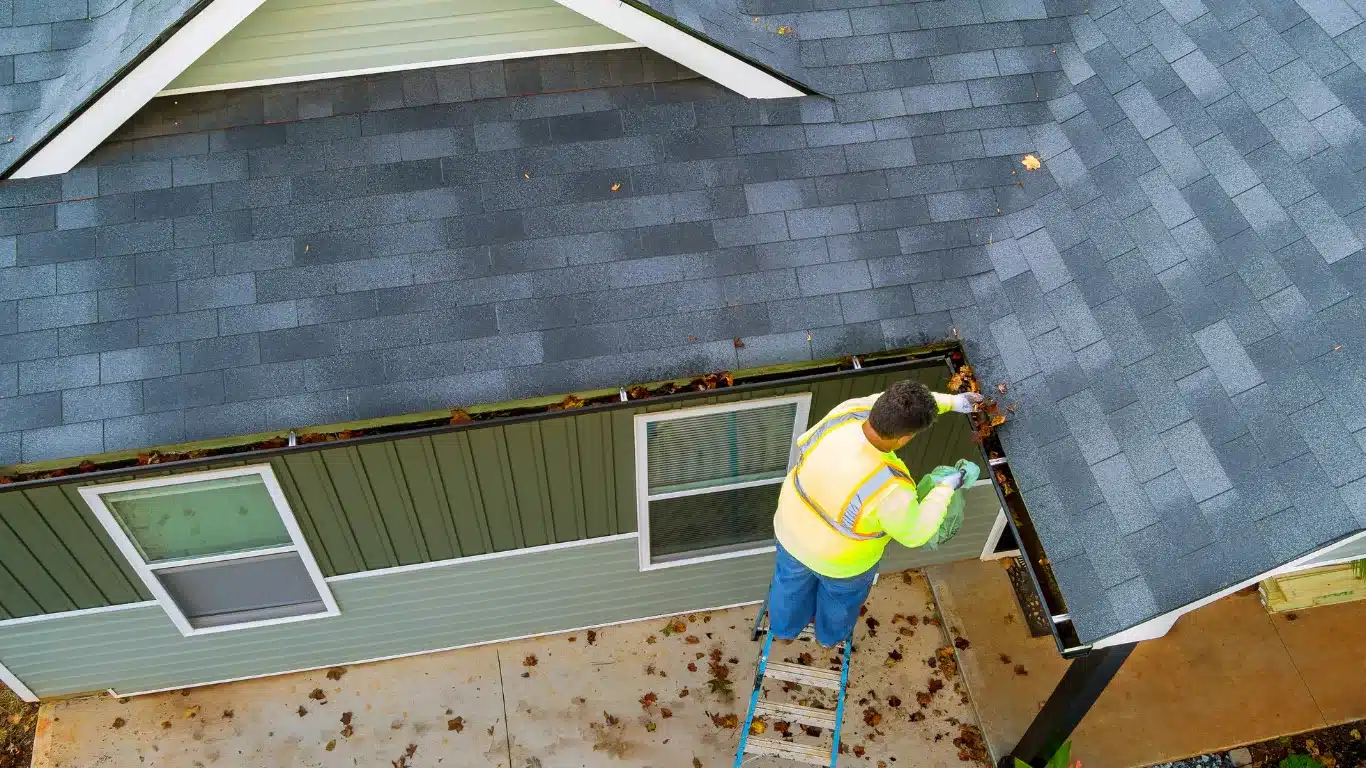
Unlike suburban homes that may safely rely on twice-yearly clearing, commercial and industrial properties require tailored maintenance intervals dictated by roof geometry and surrounding vegetation.
| Facility Environment | Recommended Cleaning Frequency | Primary Risk Drivers |
| Industrial Estates Near Bushland / Gum Trees (e.g., Macquarie Park, Lane Cove) | Quarterly (Every 3 Months) | Heavy year-round eucalyptus leaf drop, bark strips, and gumnuts clogging sump grates. |
| Urban Commercial & Retail Complexes (e.g., Sydney CBD, Parramatta, Alexandria) | Bi-Annually (Autumn & Spring) | Wind-blown litter, plastic packaging, construction dust, and dense pigeon/myna nesting. |
| High-Consequence Warehousing (Cold storage, electronics, pharmaceuticals) | Quarterly + Post-Storm Audits | Zero tolerance for internal moisture ingress; strict commercial insurance and tenant SLA mandates. |
Scheduling routine servicing ahead of Sydney’s peak autumn leaf fall (May–June) and prior to the summer storm season (October–November) ensures maximum hydraulic capacity when extreme rainfall strikes.eps your sinking fund intact, and ensures your property is fully protected against costly water damage disputes.
Protect Your Commercial Facility From Costly Water Damage
Do not wait for an internal ceiling leak to disrupt your operations or damage valuable warehouse stock. Sydney Gutter Clear provides WHS-compliant, fully insured commercial box gutter maintenance Sydney businesses trust, complete with comprehensive before-and-after photographic condition reports.
Safeguard your commercial property before the next heavy downpour:
- Phone: Speak directly with our commercial estimating team on 0490 218 310.
- Online Booking: Request a Free, Itemised Commercial Quote through our online enquiry form.
- Tender & Facility Specifications: Send your site plans or scope of works to info@sydneygutterclear.com.au for rapid scheduling.
Frequently Asked Questions
Why are box gutters prone to leaking during heavy Sydney storms?
Box gutters sit internally within the roof structure and rely entirely on internal sumps and overflow scuppers to drain water. If leaves, litter, or bird nests block these outlets during an intense storm, water rapidly backs up over internal flashing edges and floods directly into the ceiling cavity.
Can gutter guards be installed on commercial box gutters?
Yes, heavy-duty aluminium or steel mesh gutter guards can be fitted over commercial box gutters to block large leaves and prevent birds from nesting in roof valleys. However, commercial box gutters with mesh still require scheduled professional inspections to clear fine silt build-up from the trough sole below.
Who is responsible for commercial box gutter maintenance under a commercial lease?
Maintenance responsibilities depend on specific commercial lease terms, though structural roof drainage and box gutter upkeep typically fall under the commercial landlord or owners corporation’s statutory obligations. Maintaining a documented contractor service log protects landlords from tenant business-interruption claims and preserves building insurance validity.